 Posted by
 What does hearing through a cochlear implant sound like? This is a question without a simple answer. These first weeks have been a whirlwind of sound.
On Activation Day, everything sounded like very quiet cymbals, faintly chiming in time to environmental sounds and people speaking. Quickly though, my brain began to make sense of these new inputs, and I started noticing distinct sounds around me.
A Kitchen Symphony
From Day 1, the sounds of the kitchen fascinated me. The soft tap of placing a mug on a marble worktop, cupboard doors closing with a gentle thud, knives and forks clinking together in the drawer when placed in the cutlery tray. All these sounds seemed pretty realistic and almost matched the sounds my hearing ear was also processing. Full of excitement, I emptied the dishwasher in our echoey kitchen-living area, intentionally making as much noise as possible. Plates clattered together, glasses clinked in celebratory cheers, and it sounded perfect! I turned on the tap, and as water splashed into the metal sink, it made the sound of a bonfire night sparkler crackling away, proving that not all kitchen sounds sounded as they should. There was work to be done—my brain needed to retrain to make sense of these environmental sounds, just as it would need to relearn speech. But for now, my kitchen soundbath experience was more than enough to fuel my optimism.
Early Rehabilitation
The day after activation, I connected my processor to my mobile phone via Bluetooth using the AudioStream adapter. I then launched the Hearoes app, an auditory training platform designed to help users recognize different environmental sounds and build vocabulary. I was intrigued as to whether I would be able to understand any speech when played directly to my processor. For my first challenge, I had to listen to two similar-sounding words, which appeared on my phone screen along with a graphic of a lake and a boat. My task was to identify the word being spoken, with each correct answer moving the virtual boat across the lake. I clicked “Play,” thinking to myself, “Let me hear something… anything.” The words “Looks” and “Licks” appeared side by side on my screen, and at the same time, the word I needed to identify was spoken aloud. I could hear it! My heart began to race. The word clearly sounded like either “Looks” or “Licks.” I selected the option to replay the word so that I could focus on the individual letter sounds. The word sounded a little clearer. I took a deep breath and selected “Licks”—correct! A surge of confidence bubbled inside me. I kept playing, and by the end, the boat had moved partway across the lake.
After practising word comparisons in the Hearoes app, I moved on to the ReDi app—a rehabilitation tool created by my cochlear implant manufacturer, MedEl. The activities in this app felt less visually oriented and more challenging. I began with an activity in the Speech Fundamentals section of the app. I was presented with a blank screen featuring a speaker icon. When pressed, it played a word that began with the letter “f.” There were no other clues as to what the word was. This task I found more challenging, though I did manage to identify a couple of words successfully. When given the context of weather and only a spoken phrase without any visual hints, to my pure joy, I was able to correctly identify the phrase, “What’s the weather today?”—A familiar question I had asked my pupils every morning during my career as an early years teacher.
There was a mix of female and male voices on the apps, though all of them sounded like an alien with a helium addiction speaking from beneath several mattresses. This amused me—I had been curious whether I would hear Donald Duck, Mickey Mouse, Alvin and the Chipmunks, or a Smurf, as many recently activated cochlear implant recipients had described in their rehabilitation stories. The little alien in my ear sounded friendly, and I was determined to remove those mattresses to hear them more clearly.
Each session feels like progress. It’s fascinating—when I first hear a word or phrase, it often sounds like unintelligible noise, but with repeated listening, it gradually becomes clearer. It’s as if every repetition removes another mattress from the alien’s voice, making the words more distinct. Though my word recognition was nearly nonexistent at first, I’ve noticed steady progress. I still can’t identify phrases consistently, but I listen to them several times before attempting to identify them. With each listen, I notice another letter sound, a slight pause, or an inflexion. Once I reveal the phrase and see the words in front of me, I immediately recognise how the sounds I have been hearing match the words spoken. With the words on the screen, I continue listening to the phrase repeatedly, helping my brain link the sounds to the words. I say the words and phrases to myself, following the flow to strengthen these connections. Like pieces of a puzzle falling into place.
The Sound Of Music
My audiologist recommended listening to music, even though it’s not typically suggested this early on. Intrigued, during the first week after activation, I played a game I called “Guess the Beatles Song.” I selected a Beatles playlist on Spotify and flicked through the tracks, trying to identify them without looking at the song title. To my amazement, I could correctly identify most of them! I recognized the song “Yesterday” as soon as the first word was sung—“yesterday.” I ran upstairs to where my partner was working at his computer, eager to tell him that John Lennon was singing “Come Together” through my processor. I chose the Beatles because I’m confident I know almost all the lyrics to their songs, thanks to a strong obsession during my teens. My brain knows how each note should sound and the cadence of every word—something I hoped would prove beneficial during this learning process. At this stage, my aim in listening to music isn’t primarily for music appreciation; rather, it’s an exercise in word recognition. If I enjoy the sound of the music, that’s a bonus. I know it can take time to enjoy music again through a cochlear implant, and sometimes, that may not even be achievable.
Every day, I choose a different artist: The National, The Tallest Man on Earth, Kings of Leon, The Pretenders. I’ve noticed that a strong drum beat sounds good, while the gentle piano tones of Ludovico Einaudi hardly register. Bob Dylan’s harmonica in “Like a Rolling Stone” sounded pretty accurate! I also discovered a playlist on Spotify by Med-El and explored a more eclectic range of music, reading the captions to help my brain link the sounds and fragments of words to the lyrics. I found that the unique high-pitched tones of Cyndi Lauper singing “Time After Time” also came across well. The fact that Spotify offers captions for their music has been incredibly helpful, as I can read along with the lyrics while listening, helping to complete the puzzle. I can almost feel my brain working hard to make sense of the sounds—like a detective determined to succeed.
Environmental Sounds
I am gradually beginning to understand the sounds in my surroundings, though some are easier to recognize than others. Initially, I struggled to identify environmental sounds on the rehabilitation apps, but this is improving with time. I’m starting to recognize animal sounds—the first time I heard a pig-like grunt made me smile, imagining a little robo-pig snuffling around in my ear. Rhythmic sounds, like someone brushing their teeth or a saw cutting through wood, are becoming more accurate. Instruments are trickier, and I still can’t tell whether I’m hearing a flute or a guitar when asked to distinguish instrumental sounds on the apps. However, drums and cymbals sound great!
On a walk with my partner, we played a game of “Where’s the birdsong coming from?” The tinkling chirps of birds were magical, though pinpointing their exact location was challenging for both of us, as they seemed to be everywhere—which they probably were. It felt wonderful to be part of the full sonic picture again.
Processor Challenges
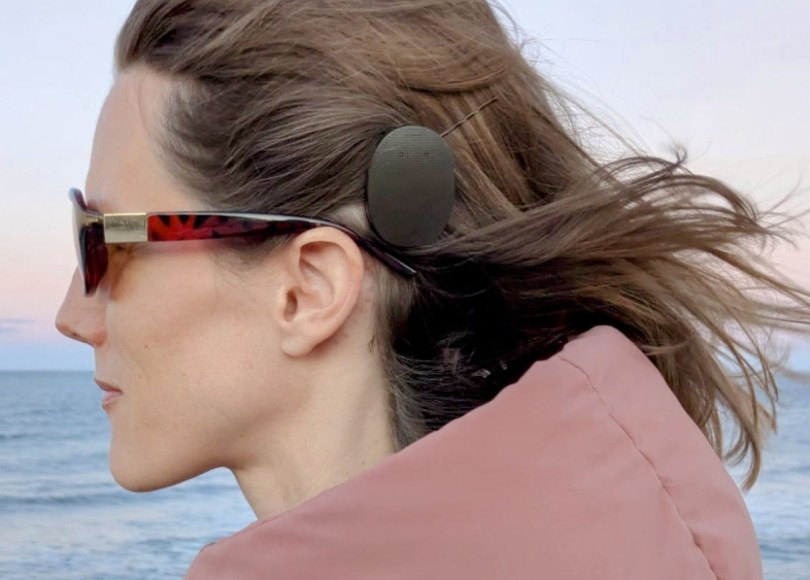
One thing I struggled with, which I hadn’t anticipated, was that for the first two weeks following activation, I experienced significant pain as soon as I placed my processor on my head. The area was still swollen from surgery, and I suspected this might be causing some nerve pain. I messaged my audiologist, who also believed the pain was due to the magnet pulling on the sensitive area. He advised me to wear it for short periods until the discomfort subsided. Early on, I became frustrated because I wanted to wear my new ear all the time. I craved access to sound and understood the importance of relearning how to process it. But I followed my audiologist’s advice, and two weeks after activation, I was able to wear my processor for most of the day with only occasional pain. This continues to improve gradually.
Cochlear Implant Travels
Nine days after Activation Day, I took my bionic ear on my travels for some festive celebrations with family in the UK. The airport felt joyfully noisy and busy—I loved it! I focused on identifying the sounds around me. I removed the processor for the flight, to give my head a rest from the slight discomfort I was still experiencing from the magnet, and I was happy not to hear the aeroplane noise while listening to a podcast through an earbud in my hearing ear.
In a busy restaurant during my holiday, I removed the processor momentarily to gauge how the experience would compare had I not been wearing it. My ear filled with slight pressure, and the void to the left of me returned. In some ways, it felt more peaceful, yet even though, at this stage in my rehab, I was hearing only muffled words and the static of mixed voices, I felt a sense of wholeness in having access to the entire mix of sounds. I immediately returned my processor to its rightful place and allowed myself to be enveloped in sound—a much happier place for my brain than the soundless void it had grown accustomed to. Time to change that.
One moment I’ll never forget happened at a quiet outdoor train station. While standing on the platform waiting for the train, I heard a sudden loud bang behind me and to my left. Instinctively, I turned in that direction—my implanted side—and locked eyes with a man walking away from his car, having just slammed the door shut. For the first time in eight years, I had correctly identified the source of a sound from my deaf side. I felt a ball of emotion fill my throat, which quickly turned into a teary smile of absolute joy.
The Little Everyday Sounds Are Often the Best
And finally, as I write this, I can hear the tap of my fingers on the keyboard—a wonderful sound to accompany my documentation of this journey. Every clink, chirp, and lyric is a reminder of how far I’ve come and how much there is still to explore. I’m excited to continue my rediscovery of sound and look forward to hearing what’s next.
 My Hearing Loss Story
Wow! This is fascinating! Your learning app reminds me very much of an online lip-reading app I once used.
One question. When you are using the smart phone app for Cochlear implant, is it dedicated only to your new device or does it broadcast to you hearing ear as well?
You are doing so well. Carly. Keep up the good work!!
LikeLiked by 1 person
Hi Al,
I connect my processor to my smartphone via Bluetooth, so the sounds and words from the app are sent directly to my cochlear implant processor – my hearing ear doesn’t have access to the sound.
Thank you for the encouragement, Al, I really appreciate it!
LikeLike
This is all such great news. Thanks for sharing your journey. Hearing sounds again after they have been absent is so joyous. It also makes you realize how much you took your senses for granted before you had and issue. I do think all of this makes us more sensituve to what other people may have to be dealing with in their lives. This was my favorite line: “For the first time in eight years, I had correctly identified the source of a sound from my deaf side. I felt a ball of emotion fill my throat, which quickly turned into a teary smile of absolute joy.” I hope your progress continues! All the best!
LikeLiked by 1 person
Yes, it is wonderful to hear new sounds in my deaf ear. It’s also great because there is the sensation of sound – the feeling of a vibration – that comes with sound, which I don’t think I really noticed until I lost my hearing. I love the feeling of sound in my deaf ear almost as much as the sound itself – my ear feels like it has woken up!
I agree with you – I do feel like I have become a more compassionate person because of my hearing loss – I have my hearing loss to thank for that.
Thank you so much for the continued encouragement. Best wishes, Carly
LikeLike
We are so delighted to hear how well you are adapting to your implant, such wonderful news. What is so striking about your journey is just how much we all take for granted.
Hoping that your progress continues with speed, what an amazing year this is set to be for you
with our love xxx
LikeLiked by 1 person
Hi Anita, thank you for the lovely comment. I definitely used to take my hearing for granted, as we do with many things in life. Sometimes, it takes a loss for us to realise how much we have.
Wishing you a wonderful year ahead! Xxx
LikeLike
Beautifully written Carly. So evocative. Off to bash out some Beatles…
LikeLiked by 1 person
Thanks, Damian! I love this! Always happy to inspire some “bashing out” of Beatles songs!
LikeLike
Thanks you for sharing your experience Carly! I have single sided hearing since April 2024 with a severe tinnitus and hyperacusis that comes and goes. I too chose MedEl for my CI and was activated January 6. Here I was provided with a Rondo 3 and a Sonnet 2. It’s nice to read about so many familiar pieces of the experience . I’m amazed at how much detail you have captured in your writings. I haven’t tried the ReDi app or music yet but will for sure.
Looking forward to your next installment!
LikeLiked by 1 person
Hi Dennis,
Nice to meet you. That’s wonderful you chose to get a CI for your single-sided deafness. How are you finding it so far? I’m also wondering what activities your audiologist has recommended for rehab, as I seem to have been largely left to my own devices. Have you tried the Hearoes app yet? This is my favourite rehab app – there are 3 free exercises everyday, which I repeat a few times to try and train my brain to distinguish between words and sounds. I have just had my one-month mapping session, and will be writing a follow-up blog soon! Wishing you all the best with your rehabilitation. Carly
LikeLike
I mentioned ReDi and Hearoes to my audiologist and they thought those were good ideas. ReDi hasn’t been officially released in the US, and they mentioned there are some German translation slants to the language which I have noticed. I’ve tried both ReDi and Hearoes at this point and have mixed feelings. I haven’t purchased the Hearoes yet but probably will.
The guidance materials MedEl provides tend to focus on people with bilateral hearing loss so the training methods are different. With the number of adults with single sided hearing loss who have gotten the CI being relatively small, I think we are a bit on our own.
Before these Apps, I’ve been using YouTube with captions. That seems to work my brain in the right way – that is, I’m brain tired after I do it. Just wearing the CI all day doesn’t really tax things. I have noticed that different videos seem to be more understandable. It might be an effect of background noise or music but I haven’t done a lot of digging there. I’m just sticking with ones that sound clearer to me for now. I find the Veritasium feed is a good one, and has interesting content as well.
Again, thank you for this Blog! It’s comforting to know you, and others, are experiencing the same thing I am! – Dennis
LikeLike
Hi Dennis,
I’ve also been using YouTube and have been watching a TedTalk each day with captions. I know what you mean when you say you feel “brain tired” after watching videos! I have recently been recommended the Word Success app from Advanced Bionics/Phonak and also a website called Angel Sounds. I have signed up for Word Success and am finding it helpful. Haven’t tried the Angel Sounds website yet. I’ll check out Veritasium on YouTube 😉
LikeLike