 Posted by
 Shakin’ Stevens’ “Merry Christmas Everyone” played on the car stereo as we made the familiar journey to Valencia. The motorway hummed beneath us, and though our Christmas playlist filled the car, my partner and I travelled mostly in silence. The significance of this day weighed on us both, a mix of anticipation and quiet reflection. The advice I’d heard repeatedly from every professional I’d encountered echoed in my mind: “Keep your expectations low.” I had never thought to ask exactly what that meant. What does it mean to have expectations low for cochlear implant activation? Nobody has really defined this to me. I had decided a few days earlier that it was possible to have low expectations and high positivity. My positivity and low expectations were going to accompany me hand in hand as I walked through the audiologist’s door for the programming of my audio processor. I carried two hopes with me: that all the electrodes would be functioning and that I would hear something—any sound—in my deaf ear.
The Unboxing
At the hospital, we were greeted by the audiologist I had met a few weeks earlier to discuss the different types of audio processors. He welcomed us with a smile and a handshake, speaking in a mixture of Spanish and English. Quickly, he transitioned into exhausting every last drop of his English skills, making a huge effort to communicate clearly and bridge any language gaps. This effort allowed us to stay fully focused on this pivotal moment in my cochlear implant journey—the culmination of two years of appointments, tests, and the surgery from which I was still healing.
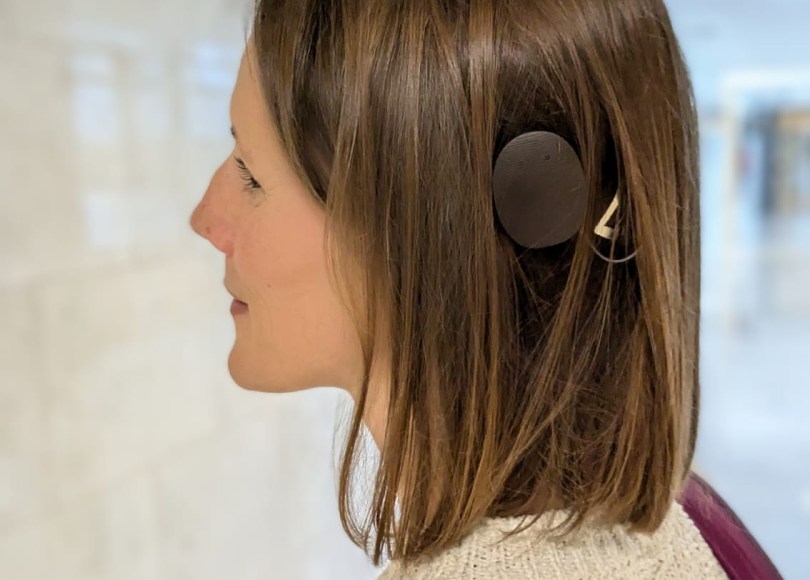
First, he unzipped a large backpack and pulled out a red Med-El box, placing it on the desk in front of us before sitting down on the other side. After handing me my Rondo 3 processor, I held it gently in my hand, running my fingers over its surface. He then began unboxing the goodies inside the red box, which included the following:
Clip Set: A range of clips to secure the device. Though the Rondo 3 attaches to the head by a magnet, the clips are used as a backup, particularly when carrying out physical activity. I chose a small hair clip, which he showed me how to attach with a click.
Cover Set: To my surprise, 4 new covers for my processor were included. “Can I change the colour?” I asked holding up the processor with its black cover. He showed me how to attach the ebony-coloured cover to my processor, which better matched my hair colour.
Aircharger: This futuristic charging pad charges the processor when you place it in the centre of the pad, with the back of the processor facing upwards.
Charging cable and power adapter: You can also charge the Rondo 3 using a charging cable with a USB power bank or other USB outlet. I think I will use this option when travelling.
WaterWear: Waterproof covers with adhesive strips for swimming or water sports.
GripWear: Small adhesive pads which can be applied to the bottom of the processor to help it fit better and keep it in the correct position.
AudioStream and telecoil adapter: I was happy to see the AudioStream included in my pack, which would allow me to connect via Bluetooth to my phone, which will be helpful for my rehabilitation. The telecoil adapter would enable me to tune in to hearing loop systems in public venues, such as theatres, museums, and banks.
FineTuner Echo and neck loop: This small, remote control-like device would allow me to check my settings, adjust the volume, switch programs, and activate streaming with connected devices. The audiologist spent quite some time setting this device up by pairing it with my processor. He then mentioned that I could also use the AudioKey 3 app, which I had eagerly downloaded to my phone beforehand. I think I will end up using the app rather than the fine tuner, which I would have to keep close to my processor for them to stay connected. He helped me pair my phone to my processor, and I had all the information I needed in the AudioKey 3 app, which, just like the FineTuner, I could control all my audio processor settings, view usage stats, and locate my processor if I should lose it.
Reading Material: Various documents to “read not study,” according to my audiologist.
The audiologist also explained that if I need dental work, an MRI, surgery, or when travelling through airports, I should show my Med-El identification card, which contains all the information to ensure these procedures are carried out safely.
The Big Moment
He placed the processor on my head and I attached the clip to secure it, though it already felt very secure. “The magnet strength feels right,” he said, advising me to monitor for any discomfort as swelling decreased. In time, I might need a weaker magnet. For now, I would be having #3 strength. He advised that if I experience any pain or itching, I should avoid irritating the area, which could occur if the magnet is too strong, and use a thin layer of gauze between the magnet and the processor. If I felt like the magnet strength needed changing, I was to make an appointment with him to do so.
He connected a cable from my processor to his laptop. He studied the laptop screen for a short while. “Everything looks good,” he said. Great! There was no obvious issue so far, and his expression showed no sign of worry. Finally, it was time to switch on the processor to test the electrodes. The moment I’d been waiting for. I felt nervous as he explained what was going to happen; that I would hear a long beep and if the sound was painful I had to tell him.
Before the appointment, I had asked my partner to take a short video of “switch-on”, but at this moment, as he reached for his phone, I asked him to stop. It was more important for me that he be there, present with me, rather than viewing the moment through a camera lens. We smiled at each other, bracing ourselves for whatever would happen next.
“Beeeeeeep!” The first beep took me by surprise. I could hear a sound in my deaf ear! It felt like, after 8 years of lying dormant, it had finally woken from a long, long sleep into a new world of sound.
“Perfect,” said the audiologist, as the sound trailed off. “That was the first electrode, it’s working perfectly.”
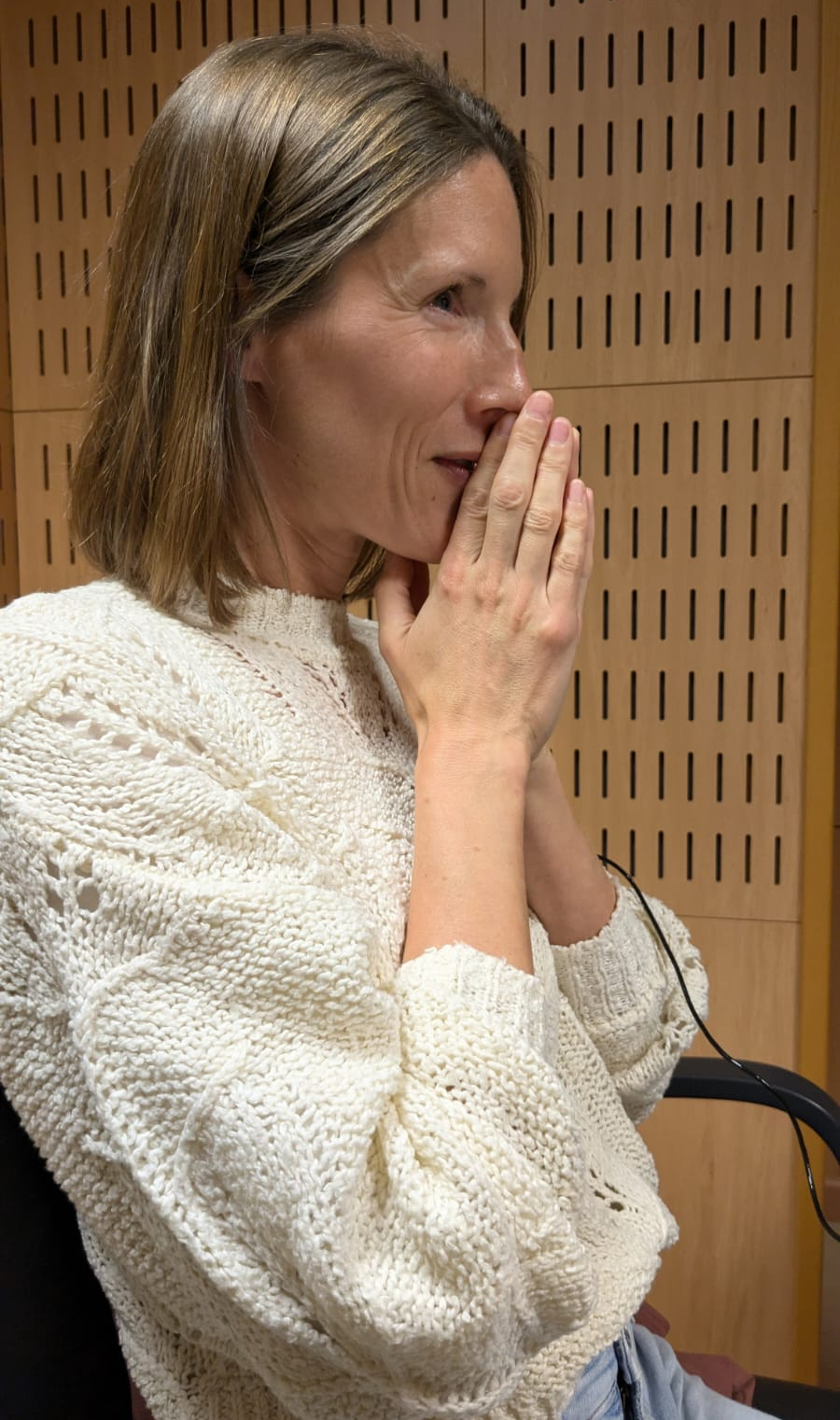
Onto the next. “Beeeeeeep!” this time a different frequency, it got louder and then quickly trailed off. I began to have an emotional reaction to the presence of sound, and I could feel my eyes filling up with tears of relief, excitement, overwhelm, and hope. I think this photo, which my partner sneakily took, captures how I was feeling far better than any words I could string together. I looked over at the audiologist, who must have seen this type of reaction so many times, yet his face seemed to soften even further.
First Impressions
The next task was to listen to some tones and I had to let the audiologist know if they were soft, normal, loud, very loud, or uncomfortable. I was aware that he would be using this information to create a customized program, or “map,” tailored specifically for me and saved to my audio processor. I identified all the tones as either soft, normal, or a new category I came up with—very soft. “You’re very strong,” remarked the audiologist after carrying out the exercise, joking with my partner, “She’s dangerous, be careful!” I’m not exactly sure what he meant by this, but I approved of the word “strong” and held onto it, as we proceeded.
“How does my voice sound?” asked the audiologist. It was difficult to tell, as I could hear him with my hearing ear, but I was aware of some beeping sounds in sync with his words in my bionic ear. “Do I sound like a smurf?” he asked, smiling. His voice sounded like tiny cymbals clinking in time with the rhythm of his words. I mimicked the sound, which made him laugh. I told him he seemed quite quiet, which I realised was intentional, as it would be a shock for my bionic ear to have noises at a high volume. He tried raising the volume to see if I thought it was a better level, which initially seemed like it might be. But then he clapped his hands and drummed his knuckles on the desk, “How does this sound?” he asked. “Too loud!” I responded, grimacing. We reverted to the original setting. He told me I would start on level 1 of a program and every week I would advance to the next level (I could do this on the AudioKey 3 app or using the FineTuner Echo device) so that in 4 weeks, I would be on level 4, which is when I would have my next appointment with him.
Rehabilitation Activities
We had a short discussion about activities I could do for rehabilitation. He suggested I practice listening to a word or sentence repeatedly, or have my partner test me by saying simple words for me to repeat. I showed him the Hearoes and ReDi apps I had already downloaded onto my phone, and he said they would be helpful. Interestingly, he also advised me to listen to music, which I know isn’t always recommended in the early days following activation.
We all shook hands and wished each other happy holidays before leaving the room. This marked the first day of hearing through my bionic ear—the first day of learning to hear again.
Reflection
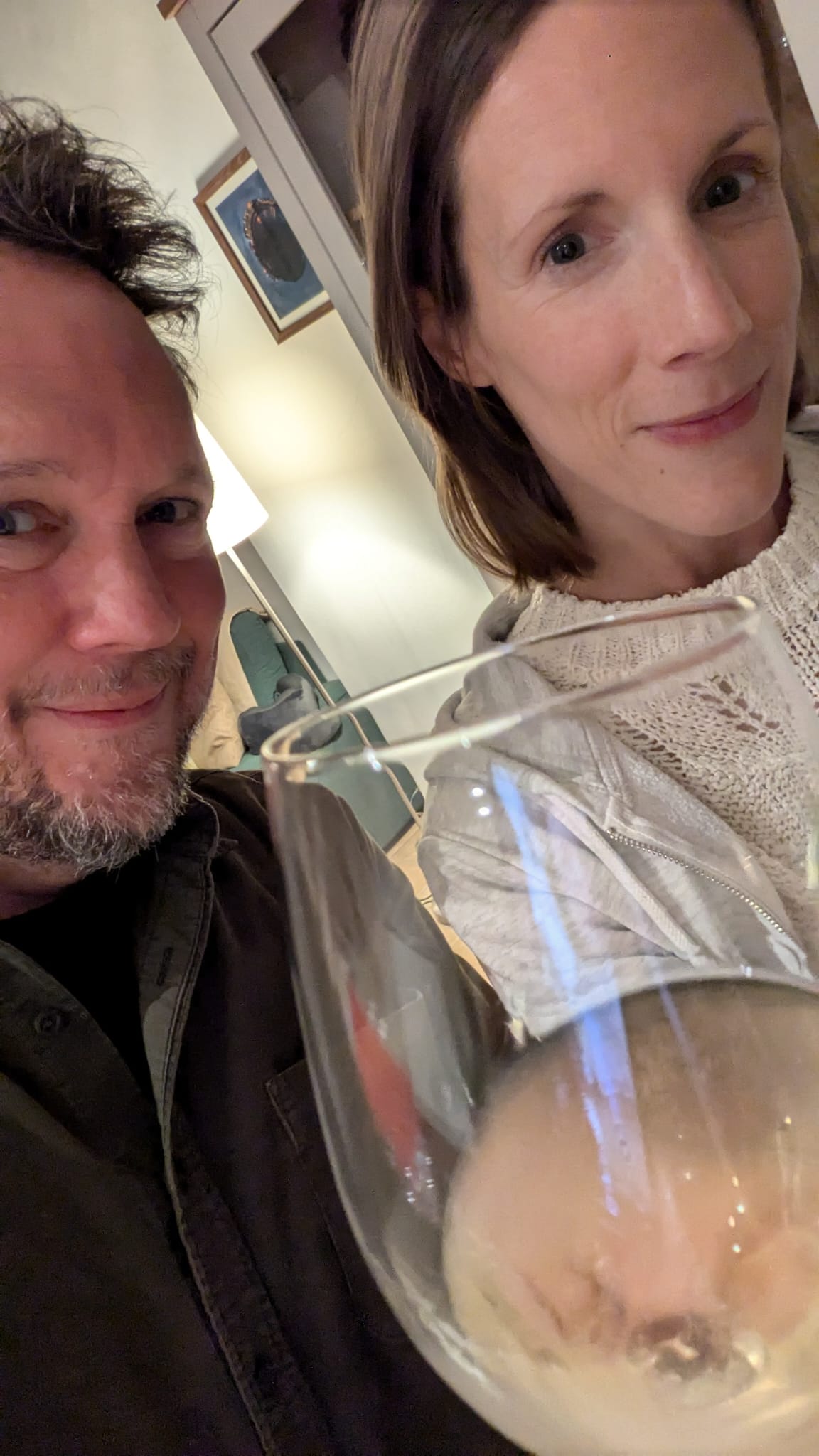
General advice for Activation Day is to take a loved one along for the ride, to help make you feel comfortable and supported, and to share the experience. Activation Day wasn’t just about me—it was a shared experience, and I noticed a shift in my partner during the appointment.
Though my partner has supported me at every step, it wasn’t until that day that something seemed to click for him. Later, he told me that being in the room, witnessing the unboxing of the equipment, and hearing the audiologist explain each gadget and its purpose gave him a clearer picture of my journey.
He watched the testing and programming process with curiosity, learning about the 12 electrodes and how they interact with my processor. By the time we left the room, he was beaming—the most excited I’ve seen him throughout this whole process.
As much as today felt like a milestone, the real work starts now. The next phase involves rehabilitation—retraining my brain to process sounds and adjust to this new way of hearing. It’s a long road ahead, but this will be where the real progress happens, and I can’t wait to get started!

Enjoying my blog?
Help fuel my writing by buying me a cup of tea!
$5.00
 My Hearing Loss Story
Merry Christmas Carly! I can picture you hearing new sounds in that ear every day. Here’s to a fantastic new year of hearing xxxxx
LikeLiked by 1 person
Happy Christmas, Vera! Yes, sounds are beginning to make more sense every day! Thank you for your support! xxx
LikeLike
Oh Carly I’ve been waiting for this and so very pleased. Alessandra and I were chatting about you at work on Friday. Her implants are amazing and I am so pleased that your journey has started so positively.
Mark
LikeLiked by 1 person
Thank you so much for your support! Wishing you and Alessandra a very Happy Christmas and all the best for 2025! Carly
LikeLike
That first photo give true credence to the saying “a picture is worth a thousand words. “You two aren’t the only ones who are misty eyed.
LikeLiked by 1 person
Ah, every time I look at that photo I am transported back to that moment! Happy holidays, Al! All the best, Carly.
LikeLike
We’ve been counting the days down along with you! I’m so glad this went well for you. Thanks for sharing your experience and the picture. I got choked up reading and have that same reaction every time I’m blessed with a period of “good” hearing. I’m having trouble recalling if dizziness and vertigo have been part of your journey and how you had dealt with that? I need to go back a re-read more of your blog and posts. So happy for you! Best wishes for the holidays to you.
Best regards,
Butch
LikeLiked by 1 person
Hi Butch, Thank you for your comment. I can imagine how wonderful it must feel every time you have a good hearing day. Yes, I do have balance disorders and have written about these in the blog. At the bottom of the blog there is a search bar – perhaps try typing in “dizziness”, “balance”, “vertigo”, “Meniere’s” or “vestibular migraine”, depending on your are of focus. Hope this helps you find some relevant posts. All the best for the holidays! Carly
LikeLike
Your description of the experience and that photo were very moving and powerful. You have a gift of conveying your feelings in words.
I’m so very happy for you and your partner and I look forward to hearing about your continued journey.
LikeLiked by 1 person
Thank you so much, Bob, for your kind words and your continued support. Happy holidays to you and your loved ones!
LikeLike
Happy new ‘ear’ Carly.
LikeLiked by 1 person
Haha! Brilliant! Happy New “Year” to you, Farisha, and Jude x
LikeLike