 Posted by
 “Carly,” my partner called, manning the speedboat.
I was steering the ferry, the big boss of the supermarket. Hearing him from my left side, I turned toward him just as a surprised look spread across his face.
“Did you get the black beans?” he asked from a few metres away.
I shook my head and motioned for him to grab some from the shelf beside him.
This was around 4 months post-activation, and the first time in almost 9 years that I’d responded to my partner calling me from my deaf side, knowing I was turning the right way. And, in a busy supermarket, no less. The surprised look on his face said it all.
“I normally say your name several times: ‘Carly, Carly, Carly.’ Then I give up and walk over to talk to you,” he told me later.
As for the nautical references, his shopping trolley (or as he calls it, the speedboat) is what he uses to zip around grabbing the specialist items we don’t buy every week. My trolley, the ferry, carries the heavy stuff like milk, canned goods, and starchy staples.
But let’s get back to the cochlear implant.
Six Months In and Continued Auditory Rehabilitation
I’m now a little over the six-month mark since my cochlear implant was activated, and while the improvements are often subtle, I continue to notice steady progress. I stick with my daily auditory rehabilitation and occasionally mix up the types of activities to keep things interesting.
TED Talks
After months of watching TED Talks, I still can’t say I’m bored. If anything, I think I’m a little addicted to these thought-provoking speeches. I’ve also realised that there are benefits to carrying out similar activities each day, because it helps me track my progress over time.
When I first started tuning into TED Talks five months ago, even though I could make out some of the speech sounds, I relied heavily on the captions to follow along, reading almost everything and lifting my gaze only now and then to look at the speaker. This balance has now flipped. Now, I focus on the speaker, gaining most of my understanding of what’s being said… simply from what’s being said, using the speaker’s lip patterns and facial cues for clues. Only every now and then do I flick my gaze to the captions to check a word or phrase.
Of course, my level of understanding varies depending on factors like the speed at which someone speaks, their gender (male voices tend to be easier for me to decode), how clearly they speak, their accent, and how tired I am.
Podcasts
Similarly, I can now follow audio podcasts much more successfully, though I still need to actively tune in, giving it my full attention, and following along with captions on the screen. I’ve realised that many podcasts on Spotify have captions available in the About the Episode > Episode Transcript section. Having a podcast playing in the background is something I would still struggle to follow.
Hearoes App
I continue to combine watching videos and podcasts with dedicated audio rehab apps, and my favourite continues to be the Hearoes app, which recently upped the ante with some new activities. Just as I thought I was sailing along, noticing I was getting more 100 per cent accuracy on familiar games, they threw some new challenges into the mix.
For example, one of these new exercises, called “Syllables and Stress,” first speaks a word and asks you to identify how many syllables it has, which I can usually answer correctly as long as I hear the word correctly. Then it asks, “Which part of the word is stressed?” For instance, in the word “together,” which part of “To-geth-er” is stressed? I’m still learning in this respect.
A more difficult addition called “Today I…” focuses on a person telling a short story about their day in a mix of video, spoken audio, and my nemesis: background noise. The task is to answer questions about what they’ve said. These sound bites often carry lots of condensed and sometimes contradictory information, with the follow-up questions focusing on just one part of the contradiction. Good old Hearoes, keeping me on my toes!
WhatsApp Voice Notes
Some days, I’m full of motivation with my rehab. Other days, it feels repetitive, frustrating, and, at times, lonely. But I’ve discovered something that keeps me going. It’s fun, different every day, and allows me to share my CI journey with those closest to me: WhatsApp voice notes. I’ve invited my friends and family to send me short voice messages as part of my rehab. I listen to them repeatedly until I’ve understood each one as best I can. In doing so, I’m also training my brain to recognise the voices of people I love, through my CI processor.
Here are my 3 simple rules for voice notes:
1. One sentence per message (longer chunks are still too complex for my CI listening brain!)
2. Speak clearly
3. Limit background noise
I’m receiving an eclectic mix of voice note genres. My partner sends me updates about his day, ideas for after-work plans, dinner suggestions, and the random thoughts that pop into his head. My sister is reading me Harry Potter, one sentence at a time, and I love hearing her warm Yorkshire accent coming through more strongly with every listen, clear, punctuated and absolutely gorgeous. My friend, an avid reader, reads me snippets from his current book. My partner’s sister and her two kids sent me voice notes to test how my “earplant” is going, along with cookie commentary and spontaneous singing! And, my partner’s mum gives me updates on life in Menorca.
The audio quality of voice notes isn’t always clear, and decoding them is not easy. I can almost feel my brain working. Sometimes I understand a message on a first listen. Other times, I have to listen over and over to get some understanding, and sometimes I just can’t make out what is being said. The more I do it, the easier it becomes. Soon, I’ll update my rules to encourage longer messages and the added challenge of background noise. This is by far my favourite type of rehab, and I would recommend it to anyone on their own cochlear implant adventure who has some word recognition… step by step.
Lace AI Pro
Speaking of background noise, for the past six weeks, I’ve had the opportunity to try out a new auditory training app called Lace AI Pro. It’s a daily series of short exercises, about 10 to 15 minutes each. The idea is to train the brain to process sound more efficiently, which can help get more benefit from hearing devices. It’s also been shown to improve things like working memory and reduce overall listening effort.
Unlike the other hearing apps I’ve come across, this one isn’t available to just download and try on your own. Lace AI Pro is only offered through certified hearing care providers, so you have to go through a clinic or audiologist who’s set up to use it. This means a certified audiologist oversees your license, helps with setup, personalises your training, and monitors progress across sessions.
There are three types of lessons on the app: “Working Memory,” which focuses on recalling specific details from a scenario; “Rapid Speech,” currently in a testing phase (beta), where you listen to varying cadences and speech speeds; and the one I use, “Speech in Noise,” which plays speech in background noise that you have to distinguish.
I have to admit, I find this exercise extremely mentally fatiguing. Sometimes I even catch myself closing my eyes just to rest for a few seconds between each sentence! It’s amazing how tiring learning to listen can be. AI-generated avatar coaches pop up every now and then on the screen to encourage you to keep going. There’s also a range of topics you can choose from for the speech snippets, like “Culture and Exploration,” “Fun Facts and Oddities,” “Health and Wellness,” and “Jokes.” One of my favourite facts from the app so far: “Giraffes’ tongues are so long they can lick their own ears.”
One feature I really love is the “My Voices” section, where you can invite friends and family to become part of your training by recording a few sentences. The app then captures their voice and uses it in future exercises.
I wouldn’t recommend this app for people in the very early days of CI rehab, unless they already have reasonably good word recognition. When I first tried it, I really struggled to distinguish anything that was said. But after doing up to 15 minutes most days for six weeks, I’m definitely improving. I now estimate that I’m correctly understanding around 60 per cent of speech in the app in low-level background noise. I’ve also noticed that when I listen to my WhatsApp voice notes afterwards, it feels like my brain has had a warm-up, and decoding familiar voices feels a little bit easier.
Why Audiobooks Haven’t Worked for Me
I’ve heard from others in the CI community who have had success using audiobooks alongside a physical book as part of their rehab, but this approach hasn’t worked well for me. There are a few reasons why. Preparing both a physical book and the audio can be tricky, especially since English-language books are non-existent in the small Spanish village we call home. I would need to plan ahead to have a book shipped from the UK and then sign up for an audiobook subscription.
In theory, I love the idea of having a book to dip into every day. But in reality, I’ve found that using just my mobile phone for rehab works best for me. It’s minimal setup: I simply plug the mini USB audio stream adapter into my Rondo 3 audio processor and start streaming. I also enjoy the freedom to choose from any YouTube video, TED Talk, or podcast depending on my mood. Each is short and sweet, perfect for my short attention span and allows for focused, intense bursts of rehab.
Tricky Sounds
There are still some letter sounds that I find tricky to distinguish. For example, the sounds “th” and “f” often blur together for me, so words like “thawed” and “Ford,” or “thought” and “fought,” sound the same. The same goes for “m” and “n” sounds: words like “comb” and “cone,” or “sane” and “same,” sound identical through my CI.
That said, some sounds that used to be difficult are now much clearer. I can tell the difference between “v” and “b” much better than before, and words like “verb” and “verve” are no longer a guessing game. Evidence that the work I’m putting into my rehab is paying off.
Music
I devote some time almost every day to listening to music through my cochlear implant. I head over to Spotify on my phone, select a song from a playlist, and either simply listen, trying to notice the nuances in the vocals and identify different instruments, or I pull up the lyrics on my phone, which are readily available on Spotify, and read along as I listen.
It’s recently occurred to me that, for many songs throughout my life, I hadn’t really paid much attention to the actual lyrics. When I used to sing along, I would just sing what sounded kind of right. Now, thanks to my focused rehab (ironically, driven by my hearing loss), I’ve probably known more correct lyrics in the past few months than at any other time in my life!
Songs are gradually starting to sound more like they should, though I think getting the best out of music will be an ongoing mission for me. A strong drumbeat comes through really well. I recently listened to “Sit Down” by James, which surprised me as it sounded pretty wonderful! Vampire Weekend’s “Oxford Comma” has a satisfyingly punchy feel. “Diamonds on the Soles of Her Shoes” by Paul Simon, a childhood road-trip classic, and early Bob Dylan favourites like “Don’t Think Twice, It’s All Right” are starting to gain fullness and the details that make them so special.
Eventually, I’d love to try using over-ear headphones over my processor to experience a more immersive stereo sound. But, ever the perfectionist, I’m holding off for now. I want that first listen to be a positive milestone in my CI adventure, not something that leaves me feeling discouraged.
“Has The CI Helped Your Tinnitus?”
This is a question I’ve been asked a lot. It’s hard to tell. I was pretty habituated to my tinnitus and rarely noticed it before my CI. But a few weeks ago, when I woke up one morning before putting on my processor, something felt different. After a few moments, I realised I could hardly hear my tinnitus, even when focusing intently. Normally, when I choose to focus on it, it becomes more noticeable. Maybe my brain is adjusting. I know some people experience immediate tinnitus reduction after their implant is switched on, while for others it takes months of consistent listening as the brain adapts to new sound input. It wasn’t my main reason for getting the implant, but it would be a wonderful secondary benefit!
Putting My Own Stamp on My CI
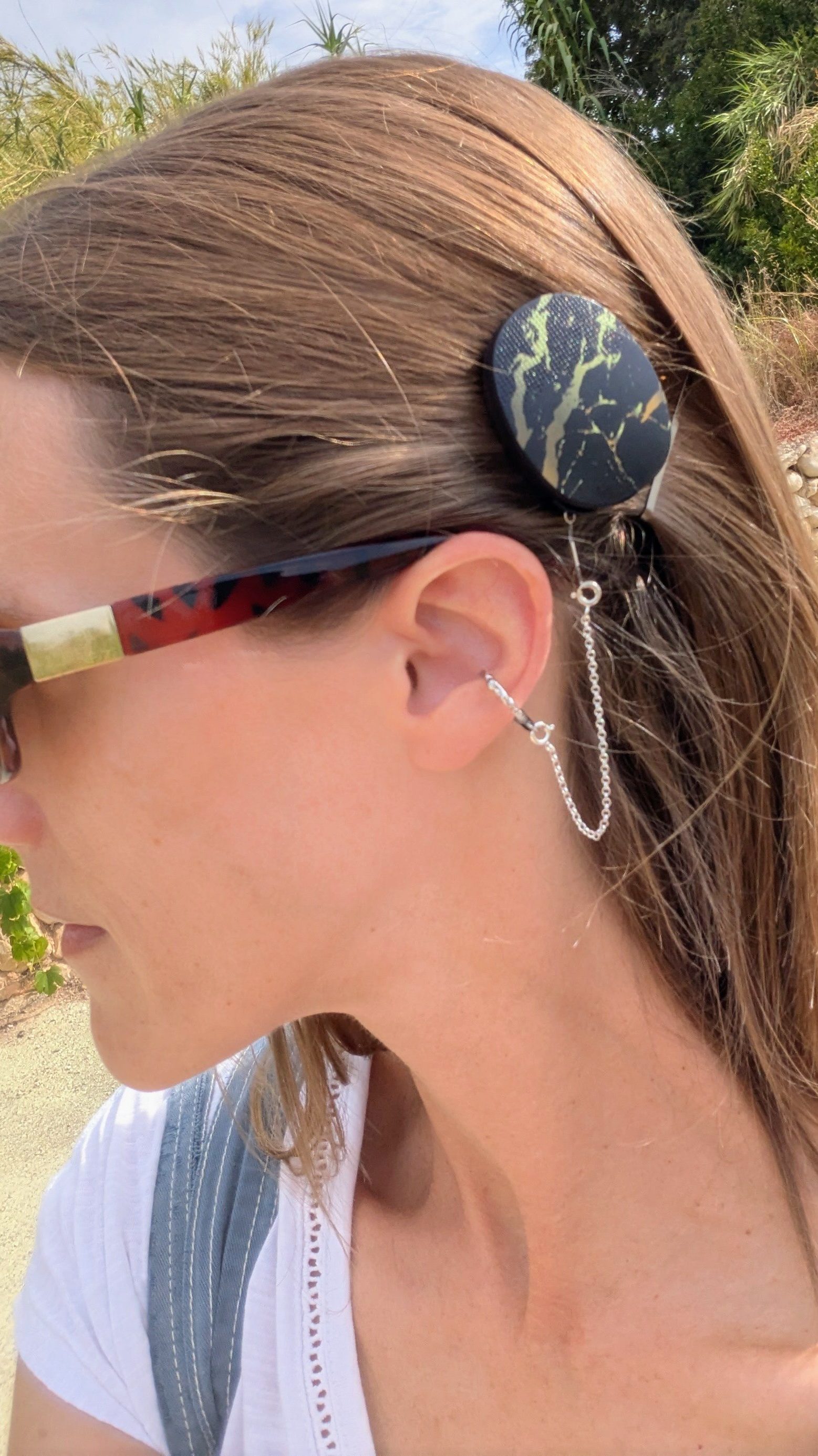
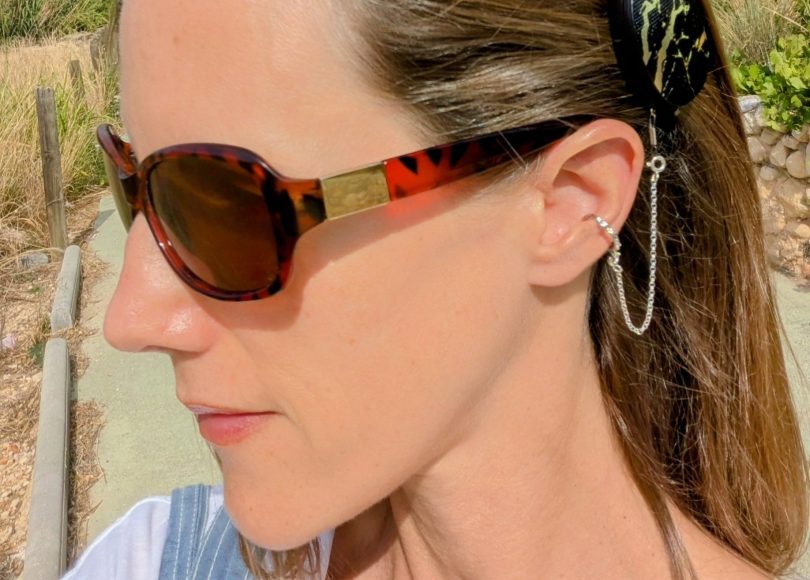
I am gradually building up my collection of processor covers from MedEl, which I am pairing with DeafMetal accessories. It’s wonderful being able to change the cover and accessories to suit my mood or my outfit, and to show off my hearing device with pride, celebrating my deaf identity. I love this beautiful DeafMetal Hammered Silver safety ring and chain, which pairs well with all the colours of my Rondo 3 covers. It’s important to mention that DeafMetal jewellery isn’t just for decoration. It also helps keep my processor securely in place, preventing it from falling off or getting lost. This is super important for me, as my partner used to accidentally knock it off anytime he even got close to me! And if it does happen to come loose, it simply hangs from my ear by the safety ring and chain.
If, like me, you love the Deafmetal jewellery and safety pieces and want to pick up something of your own with a little special offer, head over to their website and use the discount code (campaign code) at checkout: CARLY15
A Happier Brain
It’s difficult to explain the wellness side of having access to sound on both sides after so long without it. Perhaps the best way to describe it is that my brain feels happier. I feel more aware and included in my surroundings now that I have greater access to the sonic picture that surrounds me. Every day, I notice moments when I realise I’ve heard something through my processor. Birdsong (still my favourite), the “Friends” theme tune, people chatting at the table next to me on my deaf side. In these moments, I reflect on how far I’ve come, how far I still want to go, but more than anything, how grateful I am to have access to this wonderful technology.
Building Trust in My New Ear
I’ll continue to stay determined and focused on improving. My next goal is to start relying more on my CI side for everyday conversations, especially when I’m out and about. I know I need to do more rehab, but I also need to build a bit more trust in this ear. After spending so many years depending on my right ear, it’s not easy to just let this new side do some of the work.
At my six-month mapping, my word recognition score was up to 80 per cent (in Spanish). But what stood out most during the hearing test was that I was actually hearing whole words, not just groups of letter sounds that vaguely resembled words. I even smiled to myself during the test when I clearly heard the word “amor.” True to style, I’ll celebrate this milestone.
A coaching client recently asked if I had any regrets about getting my cochlear implant. My answer was a resounding, “None.”
Supporting Others on Their CI Journey
As many of you know, I’ve been working as a hearing loss coach for some time, supporting people in various aspects of life with hearing loss. More recently, I’ve added a new service focused specifically on one-to-one support for people going through their own cochlear implant experiences. This can include helping you prepare for surgery, adjust to life post-activation, stay motivated with rehab, or simply having someone to talk to who understands the ups and downs of the process. If you’d like to learn more or get in touch, you can find details here.

Enjoying my blog?
Help fuel my writing by buying me a cup of tea!
$5.00


Hi Carly, how are you?
I found your blog through Google. My story is a long one — I was born with bilateral sensorineural hearing loss. The cause? We never found out.
Tomorrow, I have my first consultation for cochlear implant surgery. It’s been a long journey, but now I’m feeling excited. Reading about your experience and emotions has been incredibly motivating. Like you, I’m also leaning toward MED-EL, and I’ll most likely go with the RONDO 3.
One thing to mention — I’m originally from Argentina and currently living in the U.S. Learning English has been a huge challenge for me, and I hope the implant will help improve that as well.
Regards
Antonio
LikeLiked by 1 person
Hi Antonio,
Nice to meet you!
How exciting that you have a consultation for cochlear implant surgery. I hope it goes well. I’m so happy you have found my story helpful and motivating.
I can understand your difficulty learning English with hearing loss. I am still learning Spanish, and have been living in Spain for a long time! Poco a poco! (¿Supongo que hablas español?)
Please get in touch if you have any questions!
Best wishes,
Carly
LikeLike
Carly- Thank you for the audio rehab suggestions. I will keep them in mind as I adapt to living with my first CI. I appreciate your guidance and support!
LikeLiked by 1 person
Hi Shanna! I hope you are doing well with your CI. Please feel free to ask me any questions you have along the way – I’m always happy to share, or help you come up with, creative ideas for rehab 🙂
LikeLike